
Winnebago County Projected and Actual Release Dates
A projected date is a current estimate produced from sentence and custody inputs under the rules that apply to that case. The actual release is the event recorded when a custodian ends physical custody or transfers the person. A court order can authorize release before jail processing is complete, and another warrant, sentence, or detainer can prevent a community exit.
For Illinois prison records, Projected Parole Date is the closest official field to the reader’s projected release date question. Projected Discharge Date is separate. It concerns the expected end of the sentence or supervision relationship. Last Paroled Date is historical. A Winnebago County jail release entry, by contrast, documents physical movement out of the local facility. These dates answer different questions and should not be substituted for each other.
Locate a Winnebago County Inmate Release Date
Begin with the sentence because the court record identifies whether the person remained local or was committed to the state. A disappearance from the Sheriff inquiry is only a lead. It can reflect release, transfer, a search mismatch, or a display issue.
- Open the Winnebago County criminal case in FullCourt Enterprise. Match the case number, name, charge, judgment, sentence, jail credit, and any mittimus or later amended order.
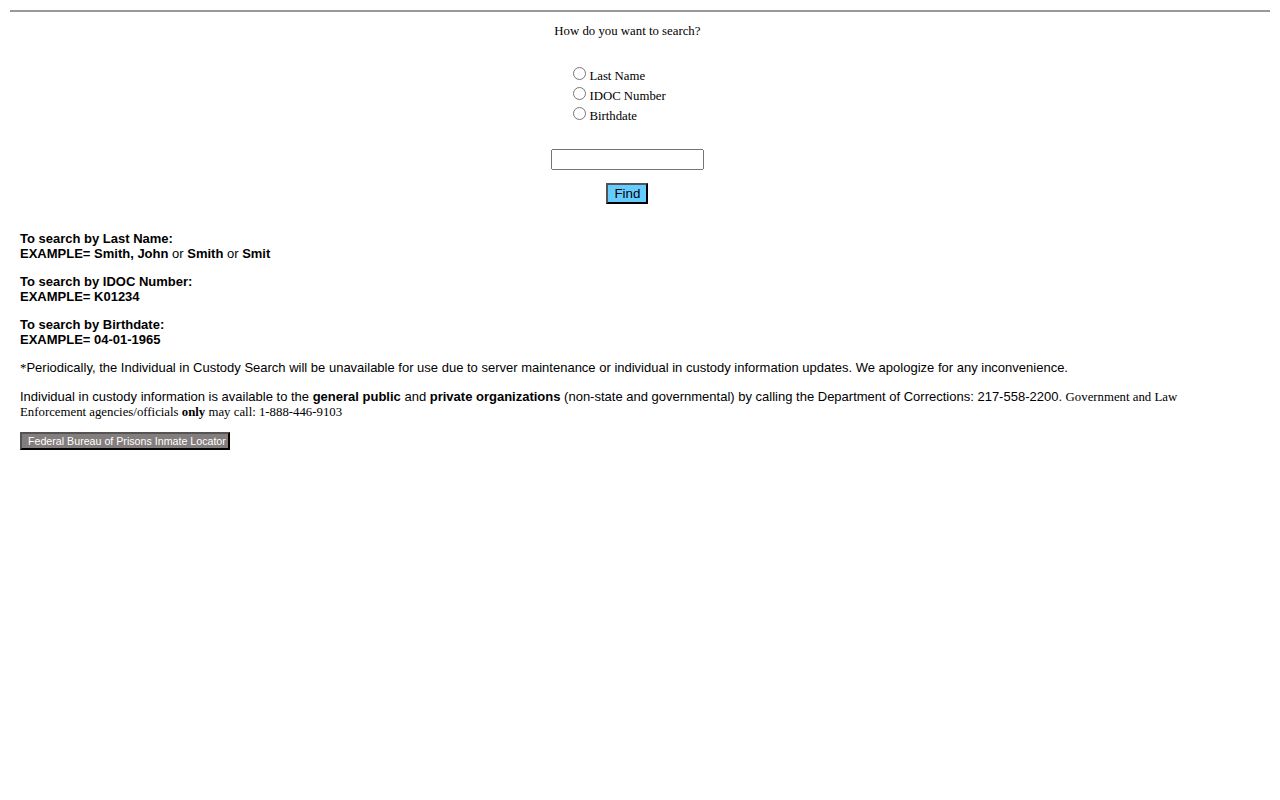
- If the sentence commits the person to IDOC, use the Individual in Custody Search. Search by IDOC number when known, or use a full or partial surname or birthdate.
- Match the IDOC number, date of birth, conviction county, offense, custody date, and sentencing entries before reading the date fields.
- Read Offender Status and Location first. Then record the exact Projected Parole Date and Projected Discharge Date, along with the date you checked the profile.
- For a jail-only sentence, obtain the sentencing order and credited custody days, then confirm the completed physical exit through Winnebago County Jail or a Sheriff release record.
- If a former state prisoner no longer appears after final discharge, use IDOC Contact Us, choose Record Search, and supply detailed identity and commitment information.
Note: A same-day gap between county transfer and IDOC indexing is inconclusive; recheck the receiving system and confirm with the custodian.
Reading Winnebago County IDOC Release Fields
IDOC’s public profile combines identity, location, admission, release, discharge, and sentence data. Reading the block as a whole helps prevent a projected date from being attached to a wrong person or wrong Winnebago case.
| IDOC field | Meaning for a release-date check |
|---|---|
| Offender Status | Shows whether the record currently says IN CUSTODY, PAROLE, or another exact state status. |
| Location | Names the institution or, for an observed parole record, the numbered parole district. |
| Projected Parole Date | IDOC’s current anticipated transition point from prison under the record’s present inputs. |
| Last Paroled Date | A past parole transition, not a new prediction. |
| Projected Discharge Date | The expected endpoint of the sentence or supervision relationship, not the prison gate date. |
| Admission and custody dates | Entry and custody-credit inputs that help place the sentence chronology. |
| Sentence Discharged? | A field tied to an individual sentencing entry and not a substitute for current physical location. |
Parent Institution, mittimus, offense, class, count, sentence, and county add identity safeguards. A parole status indicates that imprisonment ended and state supervision began. It does not mean every sentence obligation is complete.
The official live-record capture shows where IDOC places these date labels. Review it through the source page:
Illinois Credit Behind Winnebago County Release Dates
The governing Illinois sentence-credit statute is 730 ILCS 5/3-6-3. For many offenses outside listed restrictions, subsection (a)(2.1) allows one day of sentence credit for each day imprisoned or recommitted. That is often described as a 50 percent framework, but it is not a universal release formula.
Truth-in-sentencing requirements depend on the offense, offense date, statutory paragraph, and sentencing order. Enumerated categories can require 85 percent, other restrictions correspond to 75 percent, and some require 100 percent. It is inaccurate to say every Illinois prisoner serves 85 percent. Anyone checking a Winnebago County projected release date must identify the statute of conviction and offense date before applying a credit rule.
The statute also addresses program credit for qualifying successful full-time participation, subject to exclusions, in substance-use treatment, correctional industries, education, work release, behavior modification, life skills, reentry, and other specified work. Other provisions address qualifying self-improvement, volunteer assignments, and degree credit. Certain county pretrial program credit is calculated at sentencing within the statutory framework and included in the order.
Winnebago County Earned Credit Is Not Automatic
Section 3-6-3(a)(3) makes earned discretionary sentence credit dependent on eligibility and official discretion. The framework considers risk and needs, circumstances of the offense, institutional behavior, rehabilitation, and programming. Written findings and statutory exclusions or minimum-time rules may apply.
IDOC’s public guidance warns that potential eligibility does not create an expectation that credit will be awarded. When an award changes the computation, the revised parole date is reflected on the public profile. A saved screenshot from an earlier check can therefore become stale even when it was accurate on the day it was made.
Credit may also be withheld or revoked under the governing process. Never predict an individual Winnebago County date by simply dividing the pronounced sentence. The sentencing record, jail credit, precise conviction, offense date, current IDOC calculation, and subsequent legal events all matter.
What Changes a Winnebago County Release Date
A projection is designed to reflect the current legal and administrative record. Several kinds of updates can move it, and a change is not necessarily an error.
| Change | Possible effect |
|---|---|
| Credit awarded | A qualifying award can move the displayed Projected Parole Date earlier. |
| Credit withheld or revoked | Discipline or a formal credit decision can move the projection later within the law. |
| Corrected custody input | Jail credit or an admission-date correction can change the calculation. |
| Amended court judgment | A corrected sentence, count, or order can alter the controlling term. |
| Warrant, detainer, or other case | One authority may end custody while another continues it; the person may not enter the community. |
| Parole or MSR action | A revocation or other authorized action can change custody and the expected endpoint. |
A court entry and physical release record may also carry different times. The order is strongest evidence of legal authority. The custodian’s release or transfer entry is strongest evidence of actual movement. If those sources appear to conflict, check for another case number, a hold, processing time, or a receiving authority.
Winnebago County Jail Release-Date Calculations
IDOC’s projection does not govern a jail-only sentence. Winnebago County jail calculation should begin with the signed sentencing order, the sentence imposed, and the custody credit recorded by the court. The Sheriff custody record can then establish the actual release or transfer date and time. If an abbreviated docket line is unclear, order the filed document instead of estimating from the charge or booking date.
A pretrial detainee has no computed prison release date. A judge may enter a conditions-of-release order, yet the jail must receive and process it, verify identity, close out property and funds, and check for other holds. The Sheriff publishes no fixed daily exit time. A favorable order in one Winnebago County case also does not cancel a warrant, another sentence, a federal writ, or an immigration transfer.
Transfer to IDOC is continued custody. After the local movement, use the state search and allow for intake indexing. A county roster drop followed by an IDOC profile saying IN CUSTODY is not community release. The Winnebago County released-inmate records guide lays out the full custodian-first verification chain.
Confirm a Winnebago County Actual Release
Recheck the official source close to the expected date. For IDOC, record Offender Status, Location, Projected Parole Date, and Projected Discharge Date together. If the status changes to PAROLE, the record supports a transition from prison to supervision. If the profile disappears after believed final discharge, request the archive rather than treating silence as the date.
For the county jail, call 815-319-6600 and ask whether the person remains in custody and, if not, whether staff can provide the release or transfer disposition. A focused Sheriff FOIA request can seek existing records sufficient to show actual release or transfer date and time, disposition, and receiving custodian. The court docket explains why the movement was authorized but may not capture the precise physical exit.
Illinois VINE can provide a status-change alert for a participating Winnebago jail record. Use the VINELink Release Check to register against the correctly matched person, then corroborate the notice when release type or destination matters. VINE is fast, but it is not a permanent release archive and does not cover BOP or ICE custody.
Note: Date-stamp every projected-date observation because sentence credit, court action, and custody changes can revise the official record.